
Ford bets on in-house self-driving tech for 2028, and Apple is not in the picture

Ford bets on in-house self-driving tech for 2028, and Apple is not in the picture

Ford's Level 3 autonomy push relies on internal development, not a tech giant partnership

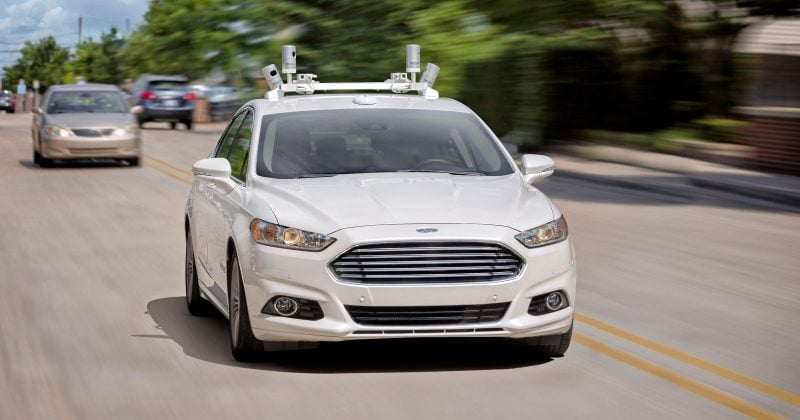
Ford has a plan for self-driving cars, and it does not involve waiting on anyone else to build it for them. The automaker announced on January 7, 2026, that it is developing its own Level 3 driver-assistance system, with a rollout target of 2028 on a new electric vehicle platform.

Ford’s self-driving ambition, built in Detroit

Level 3 autonomy is a meaningful step up from what most drivers experience today. Unlike Level 2, where you still need to keep your eyes on the road, Level 3 lets the car handle driving in specific conditions while the driver can genuinely look away, at least until the system asks them to take back control.

Ford says developing this technology internally will cost 30% less than sourcing it from outside suppliers. That is not a trivial margin in an industry where development costs routinely run into the billions.

The company already has a working foundation to build from. Its BlueCruise Level 2 system currently enables hands-free driving on more than 100,000 miles of pre-mapped roads and is sold via subscription, suggesting that Ford’s driver-assistance bet has already found a paying audience.

Advertisement

Where Apple fits in, and where it does not

Doug Field, who spent years at Apple before leaving, now serves as Ford’s Chief Officer of Advanced Technology and Embedded Systems, a role he has held since 2021.

Ford has not confirmed any integration of Apple software into its autonomous driving technology. The current relationship between Ford and Apple appears limited to CarPlay, the familiar infotainment interface that lets drivers mirror their iPhone on the dashboard screen.

Apple itself has been pulling back from its more ambitious autonomous vehicle work. The company spent years reportedly developing what was internally called Project Titan, an effort that at various points aimed at building a fully self-driving car. That project was significantly scaled back, with Apple refocusing on software rather than hardware. The idea that Apple is now plugging its autonomous software into Ford’s 2028 EV platform is not supported by anything either company has disclosed.

What this means for investors watching automotive tech

Ford says its in-house development delivers a 30% cost advantage over external sourcing, reflecting a calculation that controlling the technology means controlling the cost structure, the update cadence, and the data that makes the system smarter over time.

Several competitors, including Mercedes-Benz, have already received regulatory approval for Level 3 systems in limited markets. The question is whether Ford can do it at scale, on an EV platform, at a cost that makes the subscription economics work.

BlueCruise offers a proof of concept that drivers will pay recurring fees for driver-assistance features. If Ford can extend that model to Level 3, the revenue opportunity shifts from a one-time hardware sale to an ongoing software relationship with millions of vehicle owners.

The absence of a major tech partner in this equation also has implications for companies like Mobileye and Qualcomm that supply ADAS components. Ford leaning in-house is one data point, but if larger automakers broadly adopt this posture, the addressable market for third-party autonomy suppliers contracts.

Disclosure: This article was edited by Editorial Team. For more information on how we create and review content, see our Editorial Policy.

Ford bets on in-house self-driving tech for 2028, and Apple is not in the picture

Ford bets on in-house self-driving tech for 2028, and Apple is not in the picture

Ford's Level 3 autonomy push relies on internal development, not a tech giant partnership

Ford has a plan for self-driving cars, and it does not involve waiting on anyone else to build it for them. The automaker announced on January 7, 2026, that it is developing its own Level 3 driver-assistance system, with a rollout target of 2028 on a new electric vehicle platform.

Ford’s self-driving ambition, built in Detroit

Level 3 autonomy is a meaningful step up from what most drivers experience today. Unlike Level 2, where you still need to keep your eyes on the road, Level 3 lets the car handle driving in specific conditions while the driver can genuinely look away, at least until the system asks them to take back control.

Ford says developing this technology internally will cost 30% less than sourcing it from outside suppliers. That is not a trivial margin in an industry where development costs routinely run into the billions.

The company already has a working foundation to build from. Its BlueCruise Level 2 system currently enables hands-free driving on more than 100,000 miles of pre-mapped roads and is sold via subscription, suggesting that Ford’s driver-assistance bet has already found a paying audience.

Advertisement

Where Apple fits in, and where it does not

Doug Field, who spent years at Apple before leaving, now serves as Ford’s Chief Officer of Advanced Technology and Embedded Systems, a role he has held since 2021.

Ford has not confirmed any integration of Apple software into its autonomous driving technology. The current relationship between Ford and Apple appears limited to CarPlay, the familiar infotainment interface that lets drivers mirror their iPhone on the dashboard screen.

Apple itself has been pulling back from its more ambitious autonomous vehicle work. The company spent years reportedly developing what was internally called Project Titan, an effort that at various points aimed at building a fully self-driving car. That project was significantly scaled back, with Apple refocusing on software rather than hardware. The idea that Apple is now plugging its autonomous software into Ford’s 2028 EV platform is not supported by anything either company has disclosed.

What this means for investors watching automotive tech

Ford says its in-house development delivers a 30% cost advantage over external sourcing, reflecting a calculation that controlling the technology means controlling the cost structure, the update cadence, and the data that makes the system smarter over time.

Several competitors, including Mercedes-Benz, have already received regulatory approval for Level 3 systems in limited markets. The question is whether Ford can do it at scale, on an EV platform, at a cost that makes the subscription economics work.

BlueCruise offers a proof of concept that drivers will pay recurring fees for driver-assistance features. If Ford can extend that model to Level 3, the revenue opportunity shifts from a one-time hardware sale to an ongoing software relationship with millions of vehicle owners.

The absence of a major tech partner in this equation also has implications for companies like Mobileye and Qualcomm that supply ADAS components. Ford leaning in-house is one data point, but if larger automakers broadly adopt this posture, the addressable market for third-party autonomy suppliers contracts.

Disclosure: This article was edited by Editorial Team. For more information on how we create and review content, see our Editorial Policy.